
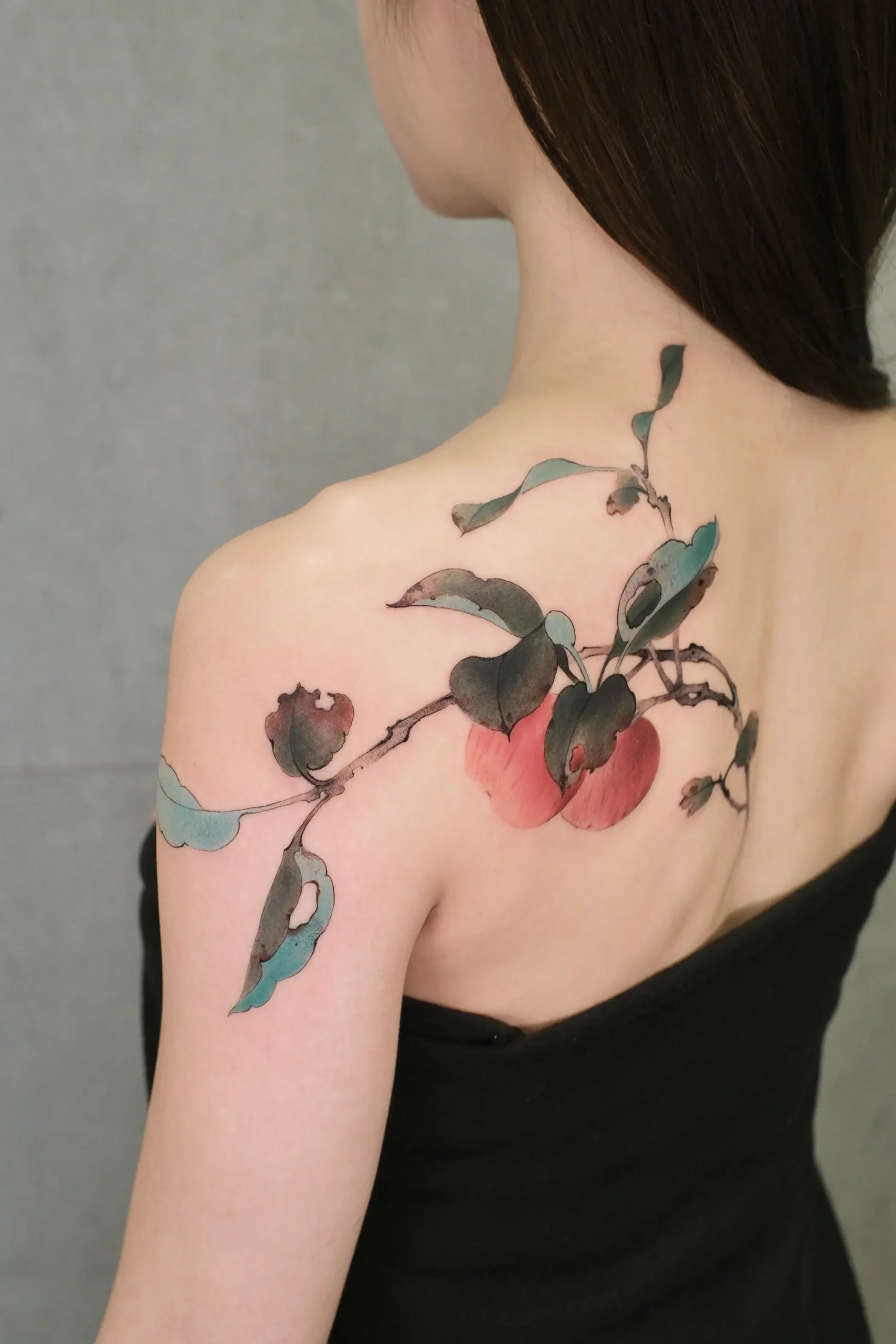
This Gongbi Mogu method (combining crisp precision and outline-free painting) is used to create a tattoo with detailed leaves and branches that contrast with soft, dreamy apples.
While tattoos have been stigmatized in China, the last 20 years have seen a shift as a new generation recognizes the medium as art and a form of individual expression. Tattooing was once a sacred practice and cultural emblem for China’s indigenous tribes. Radical artists and poets embraced it as part of an urban counterculture over a thousand years ago during the Tang Dynasty’s golden age (600s-900s). Underground tattooers adorned the bodies of these creatives and nonconformists who challenged the social order with poetic verses, nature symbols, and deity figures. The Tang Dynasty also saw the maturation of Chinese landscape painting, known as Shanshui, which focused on mountains, water, and the natural world. Historically, these two traditions remained separate. This painting style appeared on surfaces such as silk scrolls, paper, folding screens, murals, and ceramics. After centuries of complex dynastic histories, a clear 1,400-year gap exists before modern tattooers adapted the original landscapes onto the skin.
Spanning that 1,400-year arc brings us to Chen Jie, a Beijing tattoo artist who owns NewTattoo Studio and has spent more than two decades in the craft. She is known for merging traditional Chinese brushwork motifs with contemporary tattooing. In this Scene360 interview, we explore her career origins, artistic influences, and the unique touch she brings to each tattoo.
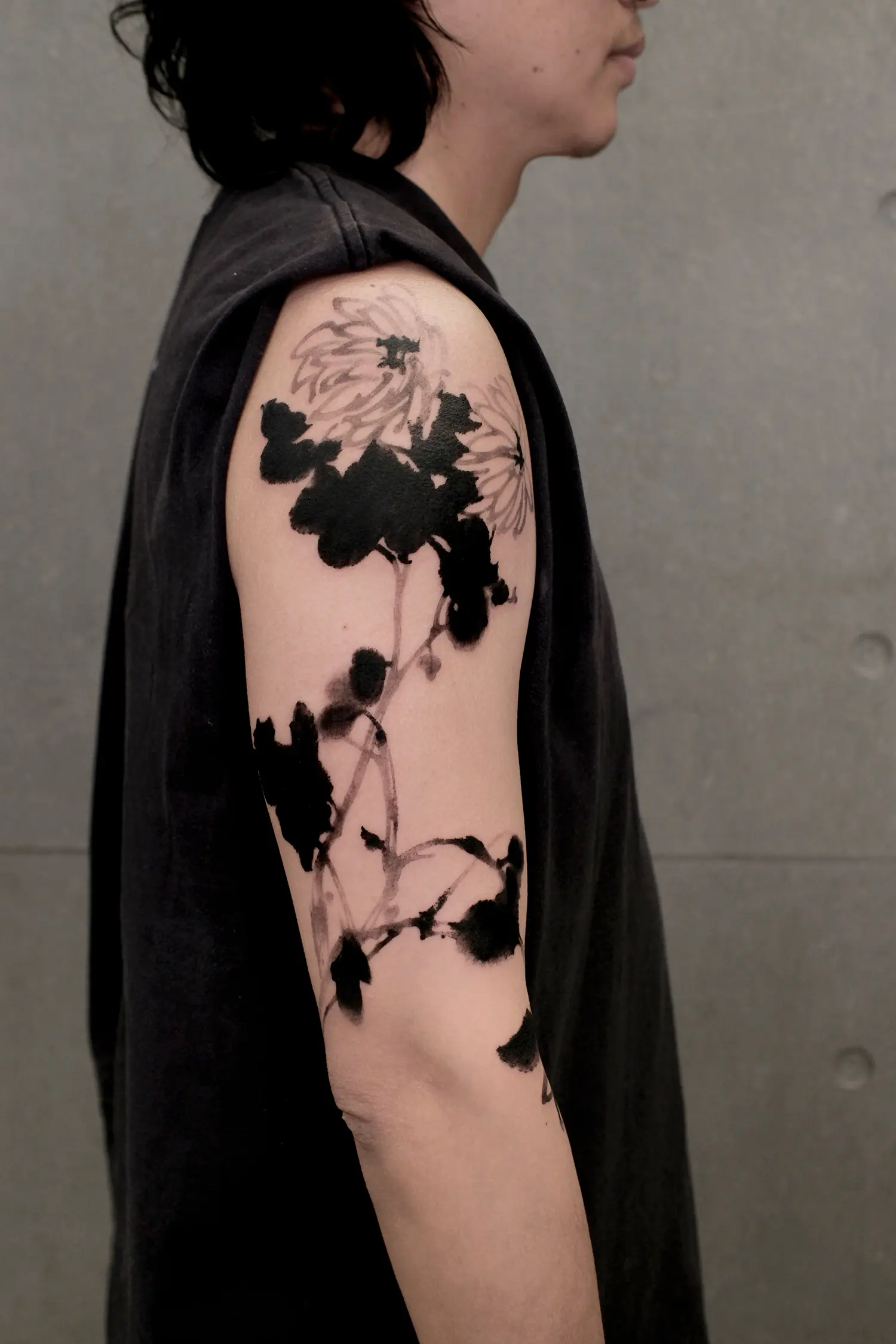
Chrysanthemums are shown minimally, using bold black ink and ink washes.
You got tattooed by Leng Yan, who subsequently became your mentor. In which year did he initiate mentoring you?
It was in 2005. I’m truly grateful to Mr Leng for introducing me to the tattoo industry. It’s fair to say that he changed my life.
At that time, tattooing was still a very small and niche industry in China. He had a tattoo studio in Beijing’s 798 Art District, with a very distinctive artistic style. It’s how I got the opportunity to enter this field.
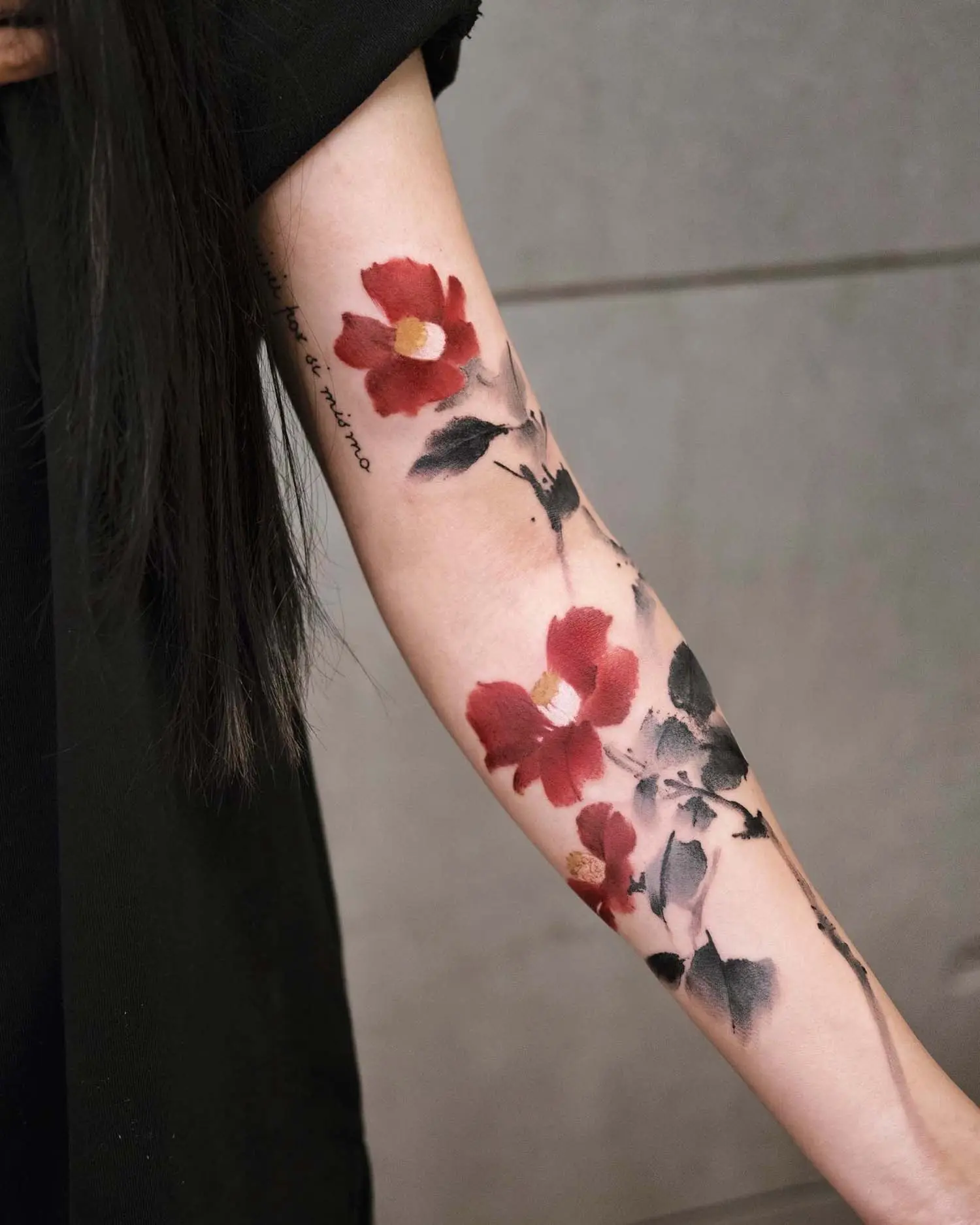
A tattoo featuring vibrant red passion camellias with painterly textures.
What moment sparked your desire to make Chinese art tattoos? Do you remember someone adopting this style before you?
There was a traditional Chinese peony painting hanging in my parents’ living room. My father had bought it from a local market for only 80 RMB [about $12]. People from my parents’ generation often appreciated traditional Chinese ink paintings—subjects like longevity peaches, landscapes, flowers, and birds. That peony painting was done purely in the ink-wash style, and it hung right by the entrance to their home. While looking at that painting, I started wondering, “Why doesn’t something like this exist in tattooing?” That was probably around 2007 or 2008.
At that time, this was still a very unexplored area. My first thought was that it was difficult to achieve that kind of ink-wash effect on skin. I thought, if it could be done, someone would probably have already tried it. Maybe there’s a reason artists weren’t doing it; that ink-flowing and spreading texture seemed impossible to recreate on human skin. But at the same time, I kept thinking that if my technique ever became good enough, I would definitely try it.
After that, I started experimenting little by little. I still had to make a living back then, so I started with Chinese calligraphy tattoos. Then I gradually experimented with subjects like lotus flowers and small Gongbi-type (fine-line traditional Chinese painting) elements.
As my technique and design skills developed over the years, I found ways to express qualities of Chinese ink painting through tattooing—the feeling of ink diffusion, layering, and space.
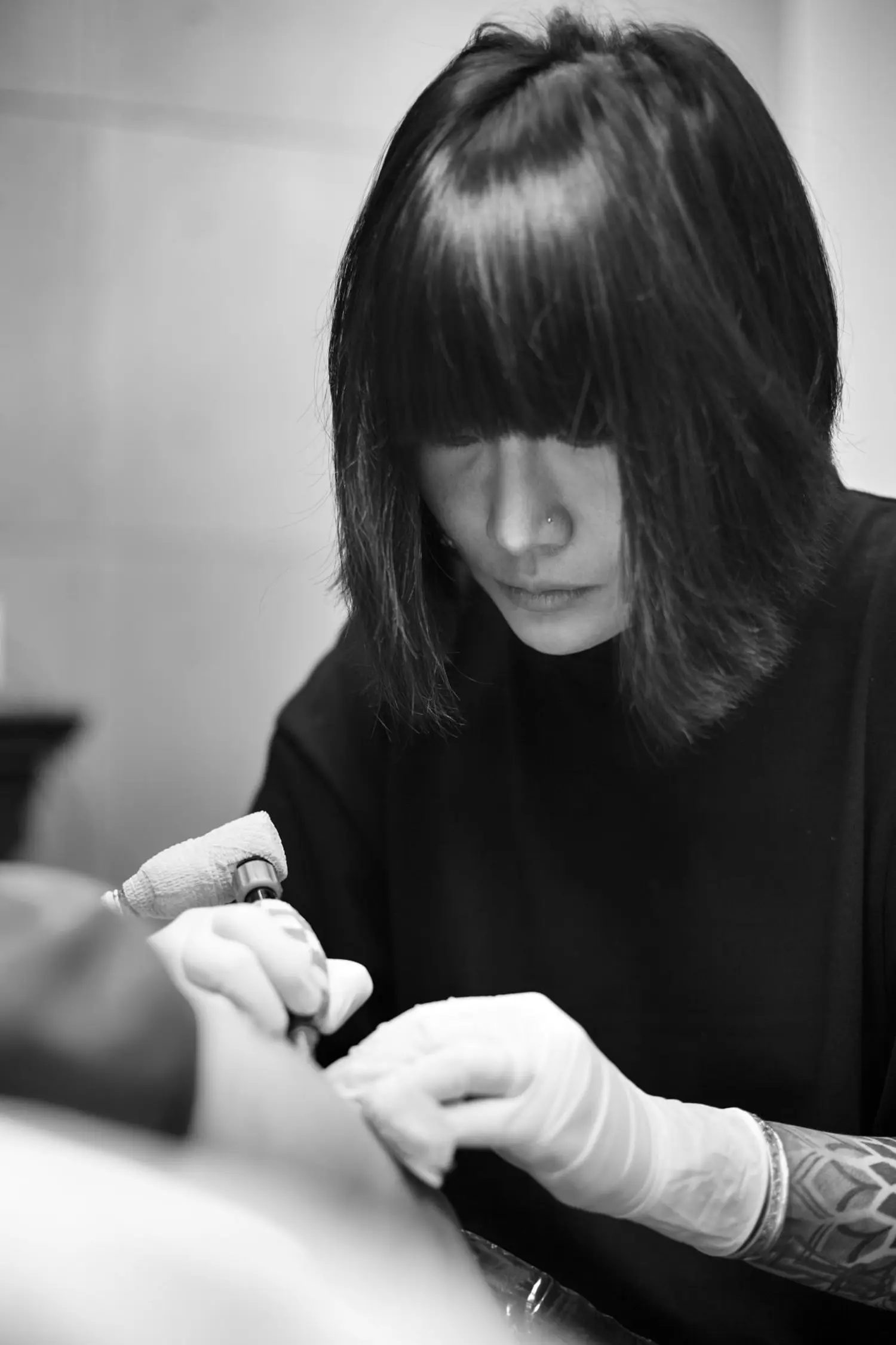
Chen Jie has been a tattooist since 2005, and her meticulous work has earned her international recognition.
Do you think you pioneered the integration of traditional Chinese painting into modern tattooing?
Haha, I wouldn’t say I pioneered it, but I was one of the early artists who explored combining tattoo art with the brushwork, negative space, and ink-wash techniques found in traditional Chinese painting. I feel honored that this fusion has helped bring ink-wash style tattoos to a wider audience, and I’m grateful to see this style continue to be appreciated and evolve.
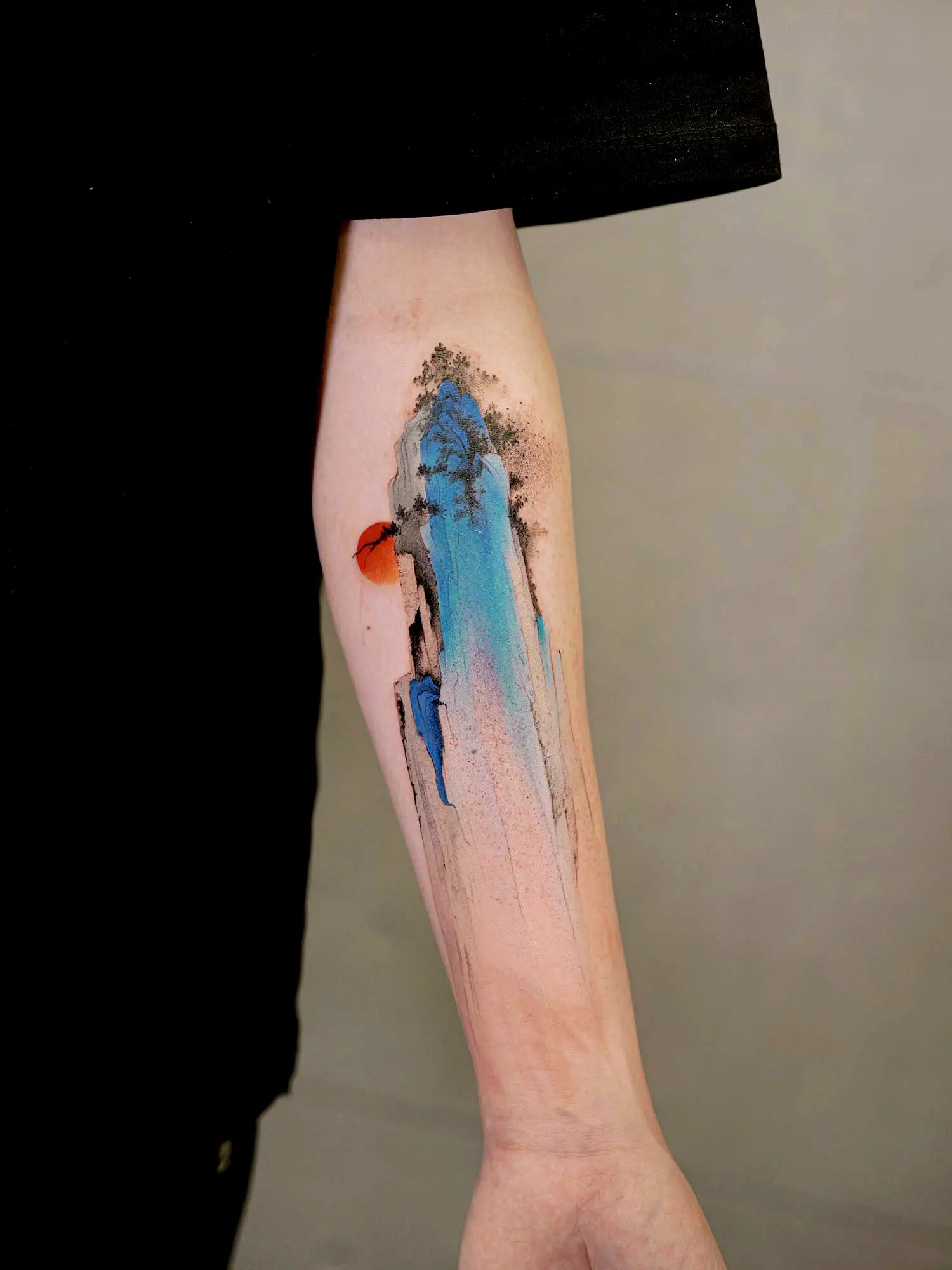
Inspired by Wang Ximeng’s “A Thousand Li of Rivers and Mountains,” this piece uses azurite blue and gentle teal to interpret the mineral palette.
Did you ever imagine people from other countries would travel far to China to get a tattoo from you?
Not at all. I never really thought that far ahead at that time. I was grateful that people were willing to trust me with their tattoos. That was already very meaningful to me.
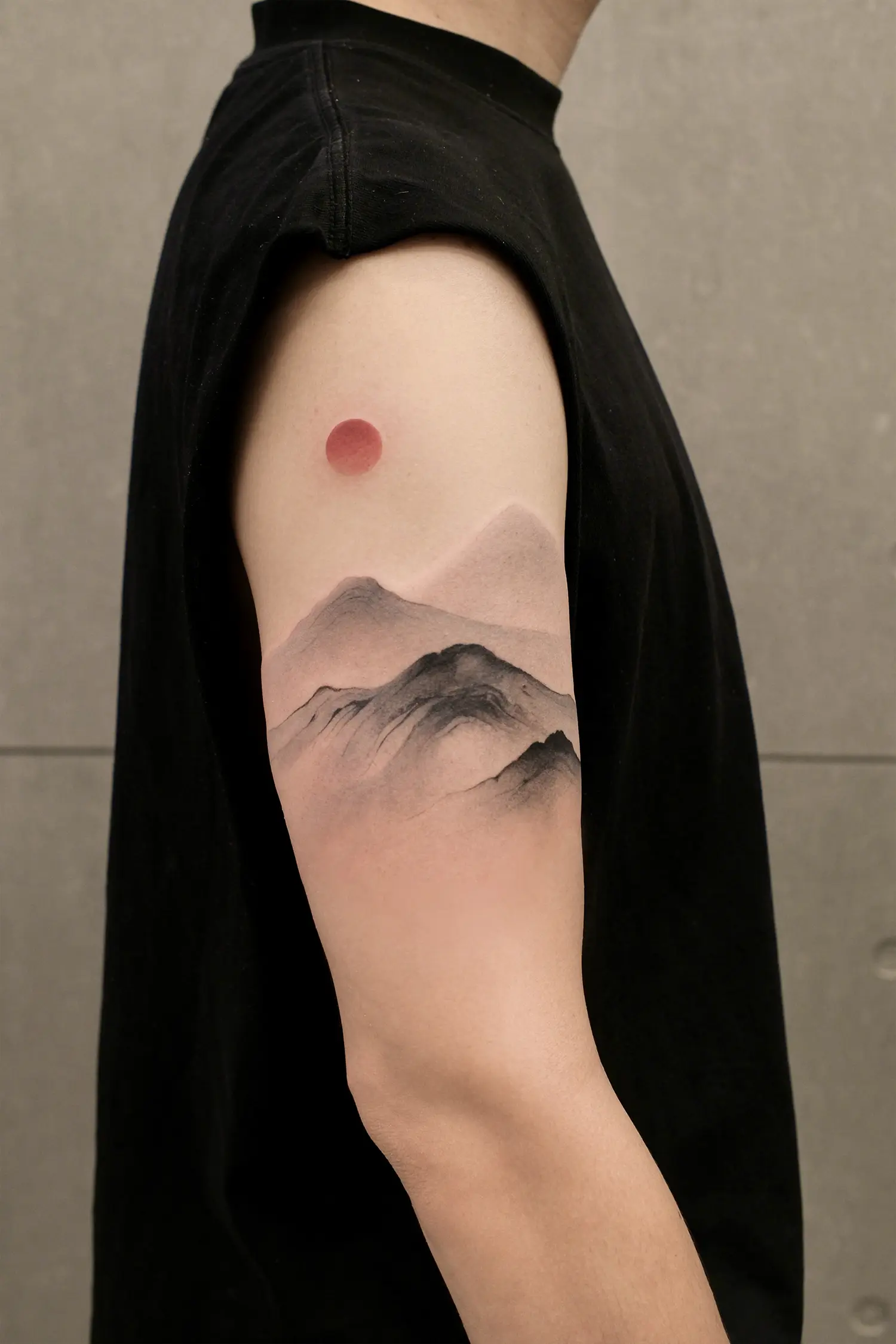
Shanshui, the “mountain-water” image, depicts the balance of Yin and Yang as sturdy, powerful mountains and calm, flowing water.
Which dynasties and Chinese artists do you draw inspiration from?
My inspiration mainly comes from the visual aesthetics of the Wei and Jin, Song, and Ming dynasties. For example, I’m influenced by Bada Shanren’s use of minimalism and negative space, as well as Xu Wei’s expressive freehand paintings. I tend to extract the artistic essence and aesthetic principles from classical Chinese paintings, then reinterpret them through the structure and flow of the human body.
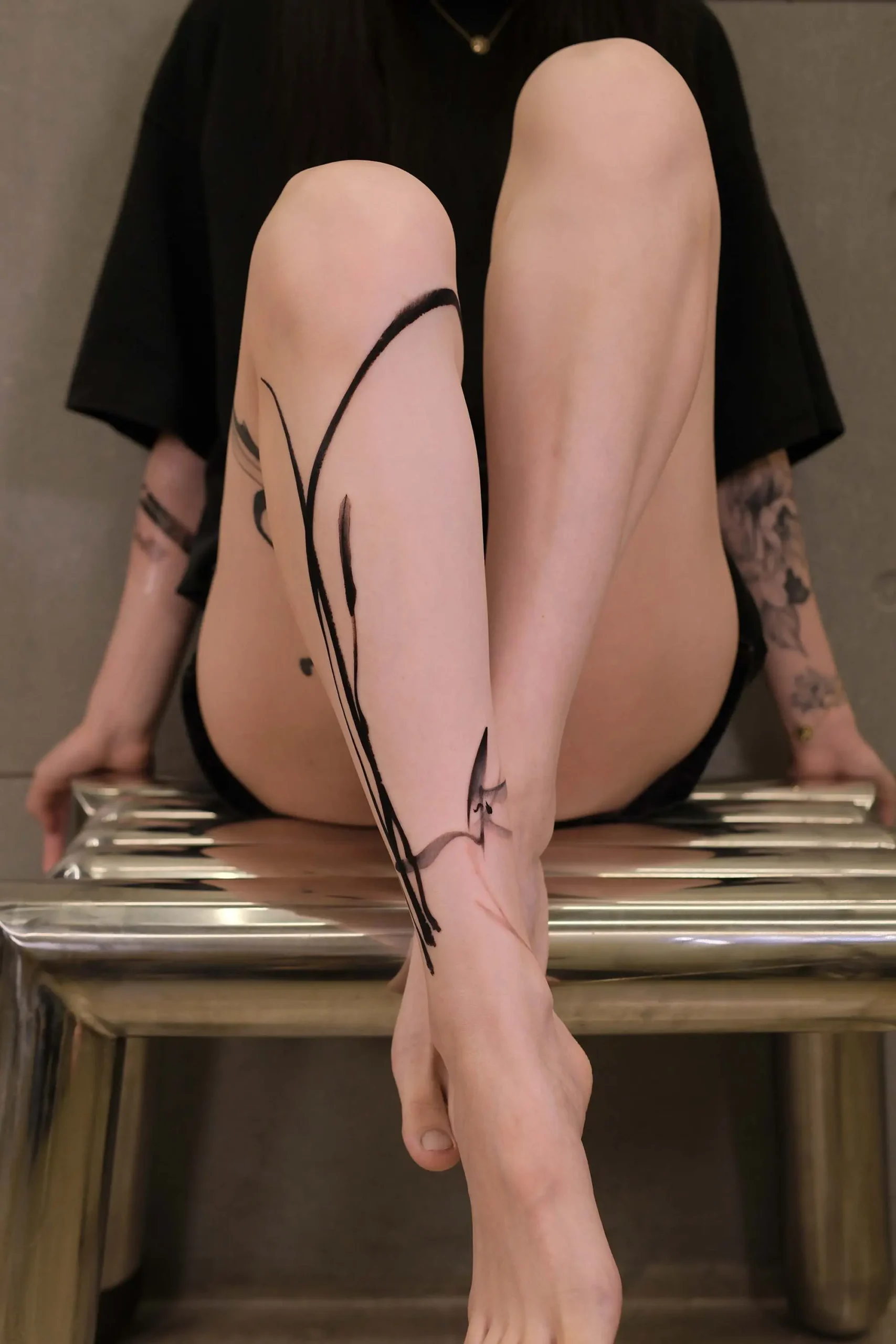
Chen Jie made this tattoo for a former guest artist at her studio. The recipient moved to the US and wanted a visual reminder of China.
“Reinterpret,” such as an expression of your own creativity?
Yes. I usually start by studying a large number of classical Chinese paintings, then develop initial sketches based on my clients’ ideas and requests. However, I don’t always stick rigidly to the original design during the tattoo process. Sometimes I incorporate my own freehand elements and let the piece evolve naturally on the skin.
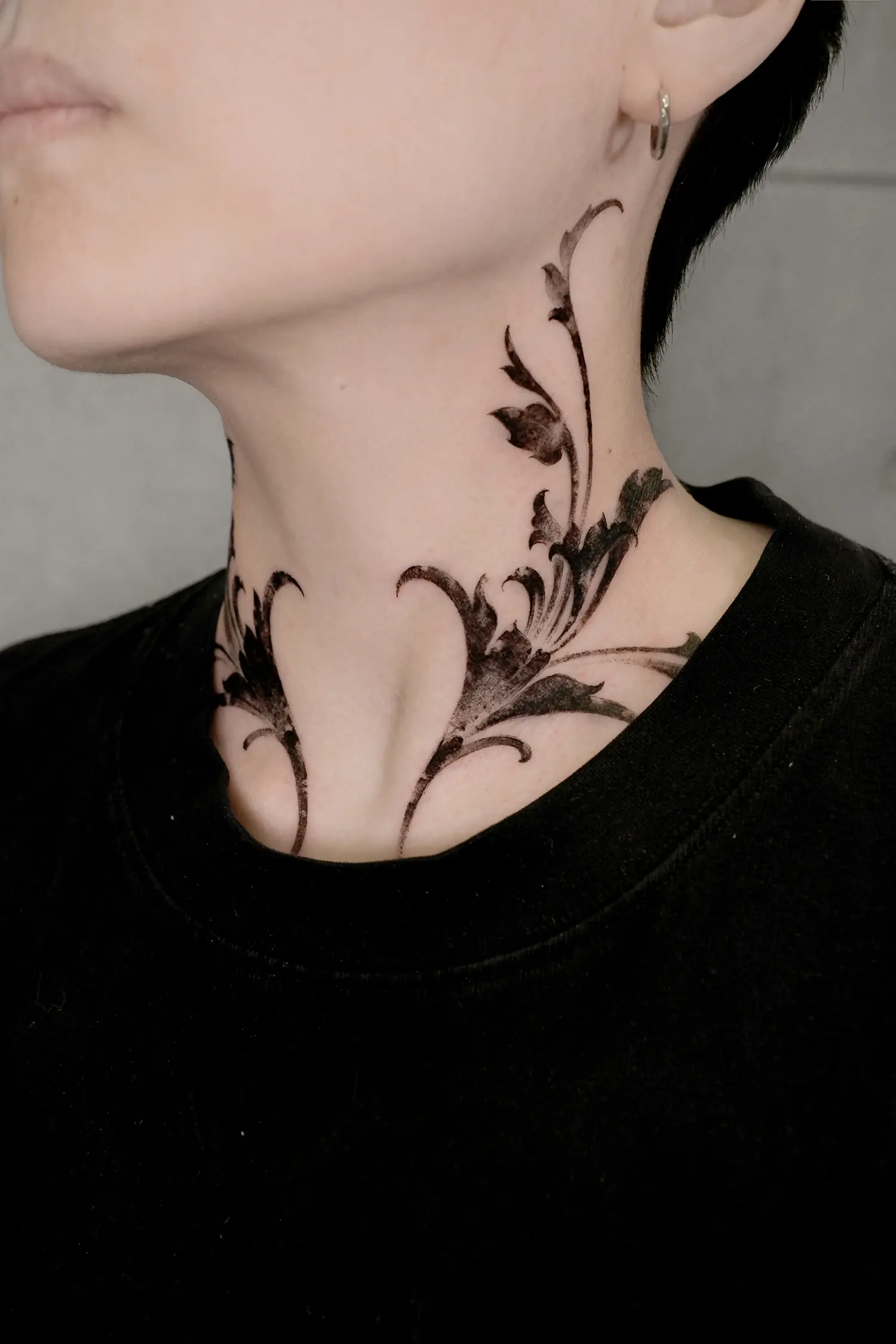
This traditional Chinese scroll grass pattern, which displays flowing vines on the client’s neck, signifies an eternal prosperous life journey.
What preconceptions and real stigmas in China should be improved?
In China, there are still some people who hold negative stereotypes toward people who have tattoos. However, sometimes people appreciate a certain design or want to preserve a meaningful memory. A tattoo is just a form of skin art, and it has nothing to do with a person’s character or upbringing.
I hope people can learn to separate a person’s character and values from the artwork they choose to have on their skin, and become more accepting of diverse aesthetic choices.
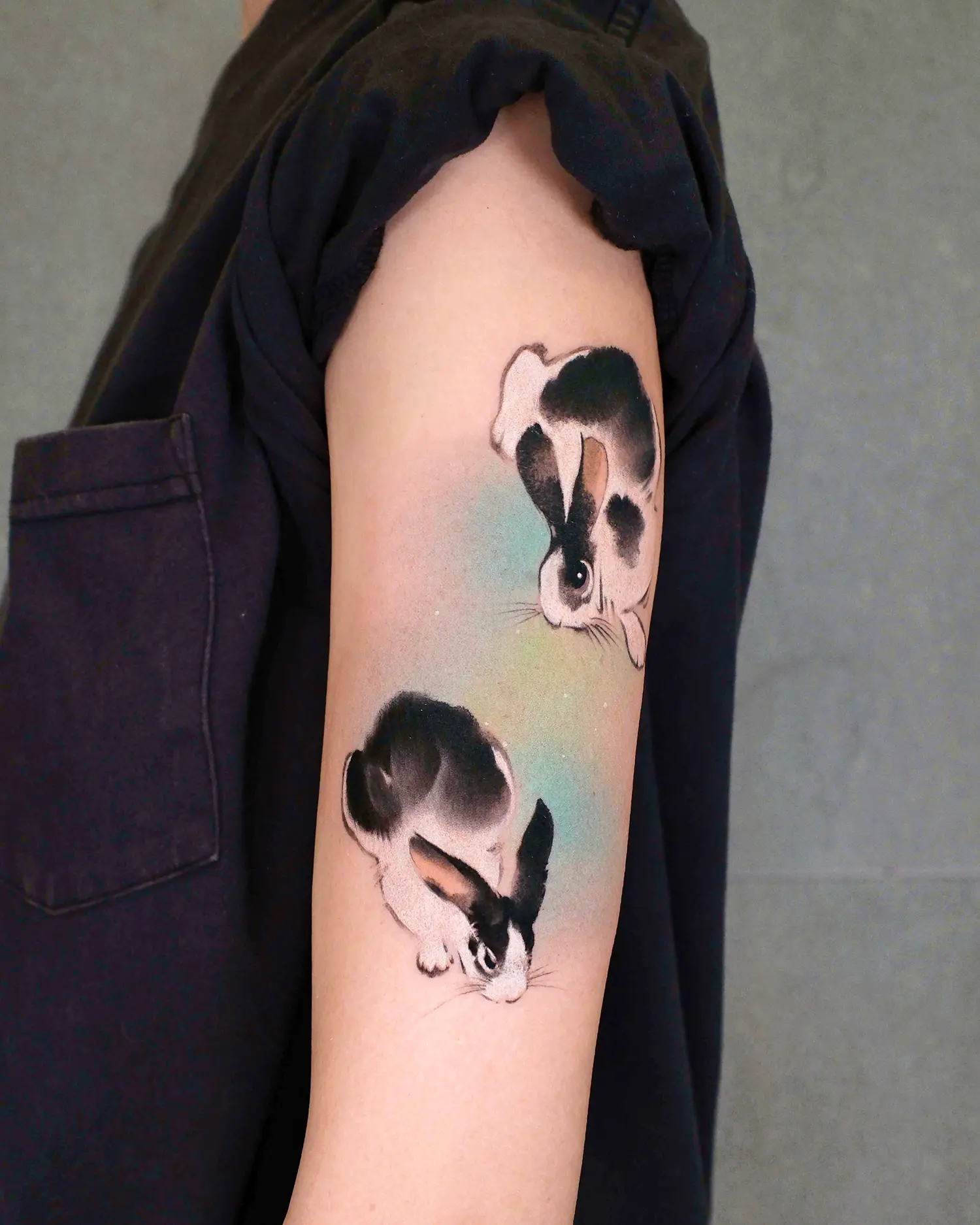
The client and a member of their family were both born in the year of the Rabbit.
On average, are Chinese tattooers supportive of one another and fostering growth, or are they highly competitive and self-obsessed about their success?
I think the overall atmosphere is positive and progressive—artists dedicated to original creations value communication, support, and mutual growth. Many of us are coming together to develop local Eastern tattoo culture further.
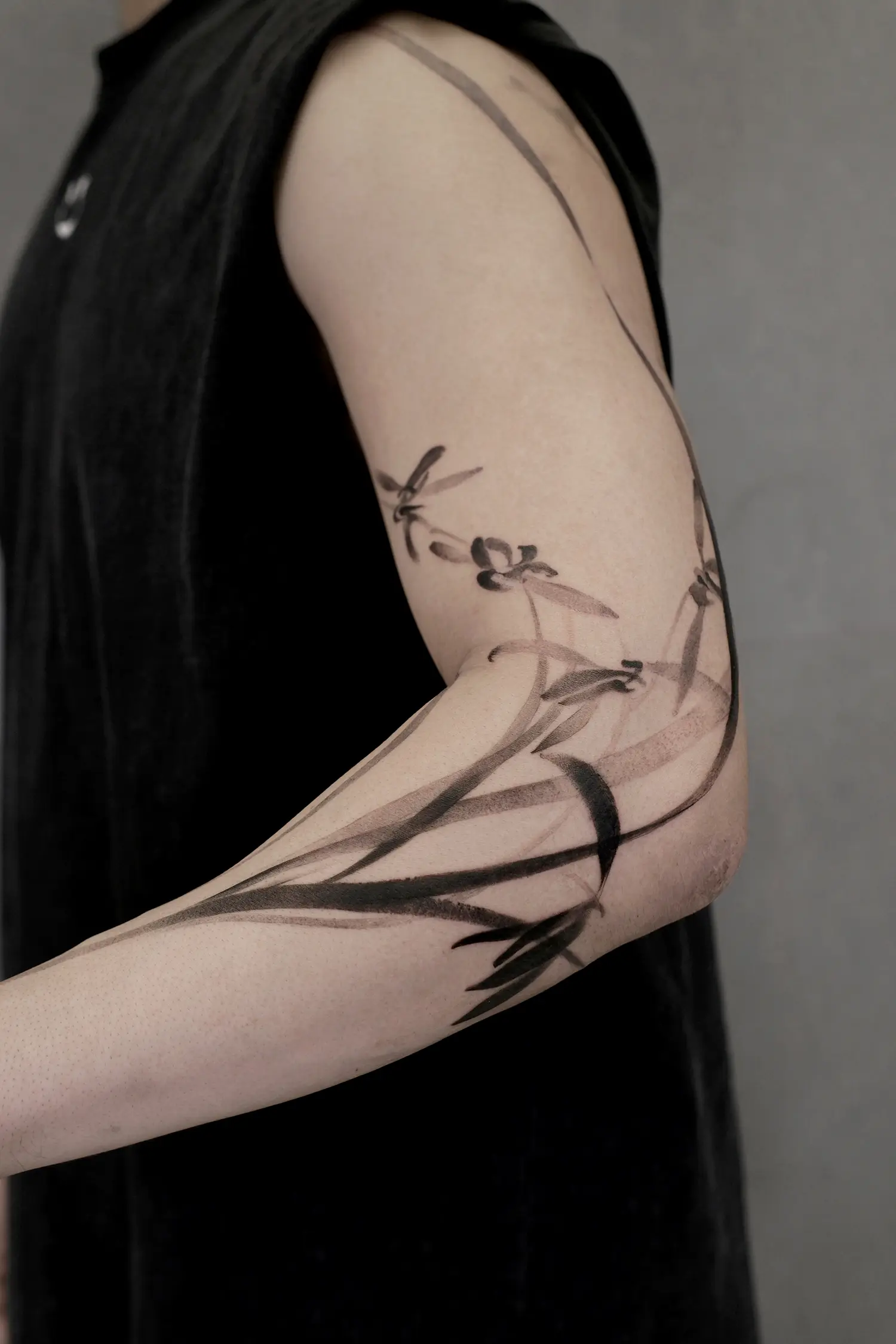
A stylized orchid in the ink-wash look that is beautifully positioned.
Do you have any favorite subject matters for tattoos?
I love when clients give me full creative freedom. It allows me to explore more ideas and bring them to life. I put my genuine passion into every piece I create.
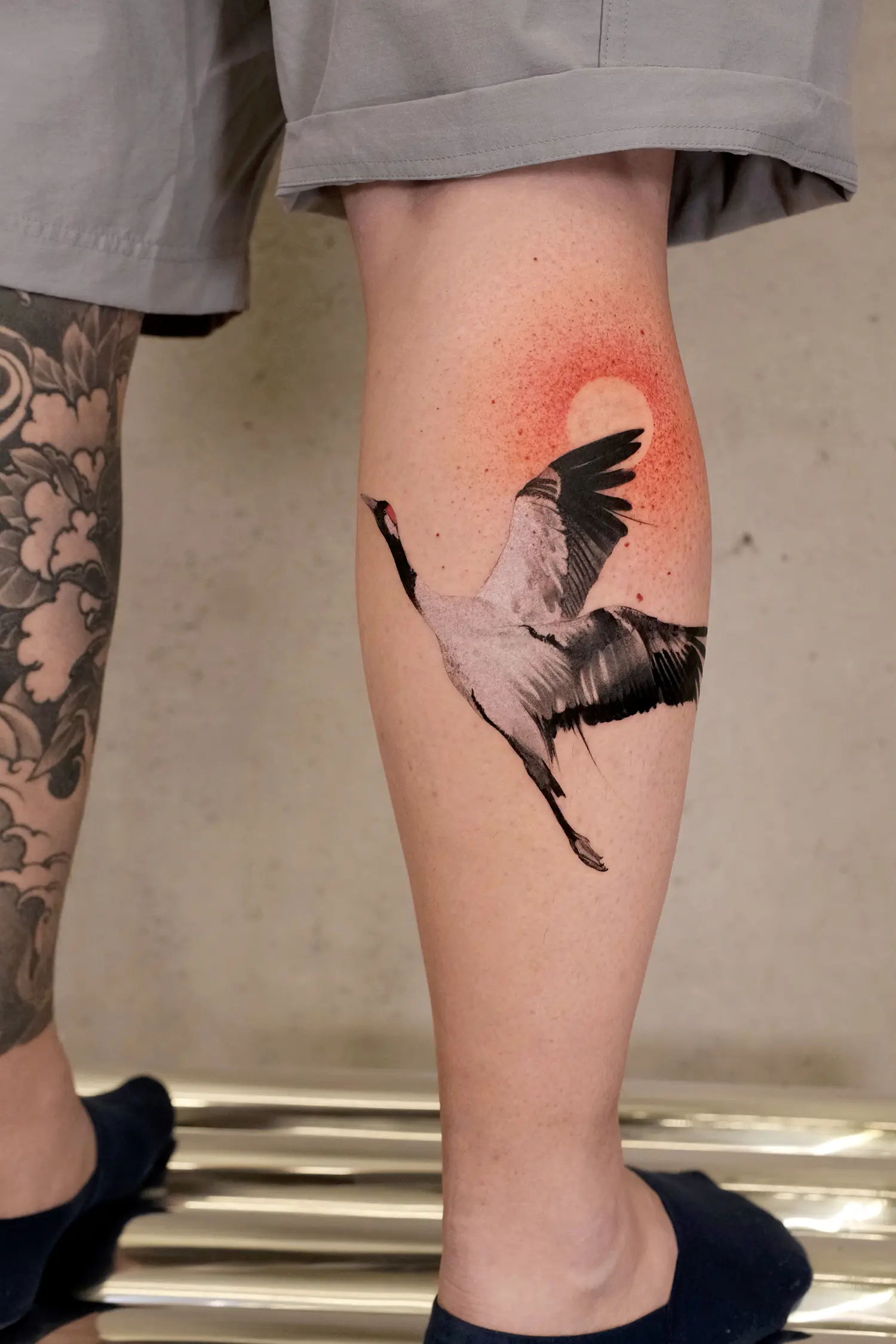
A spiritually liberating and gracefully soaring crane rendered in an ink-wash form.
Tattoos with fewer outlines tend to blur over time. Have you devised a method to ensure that your artwork has reasonable longevity? Is it due to needle technique, design simplicity, or both?
Not necessarily. I think that is actually a common misconception. Different tattoo styles naturally age in different ways, and slight changes over time are completely normal. For example, traditional and old-school tattoos often pursue strong saturation and bold structure. Slight fading over time does not mean the quality is bad.
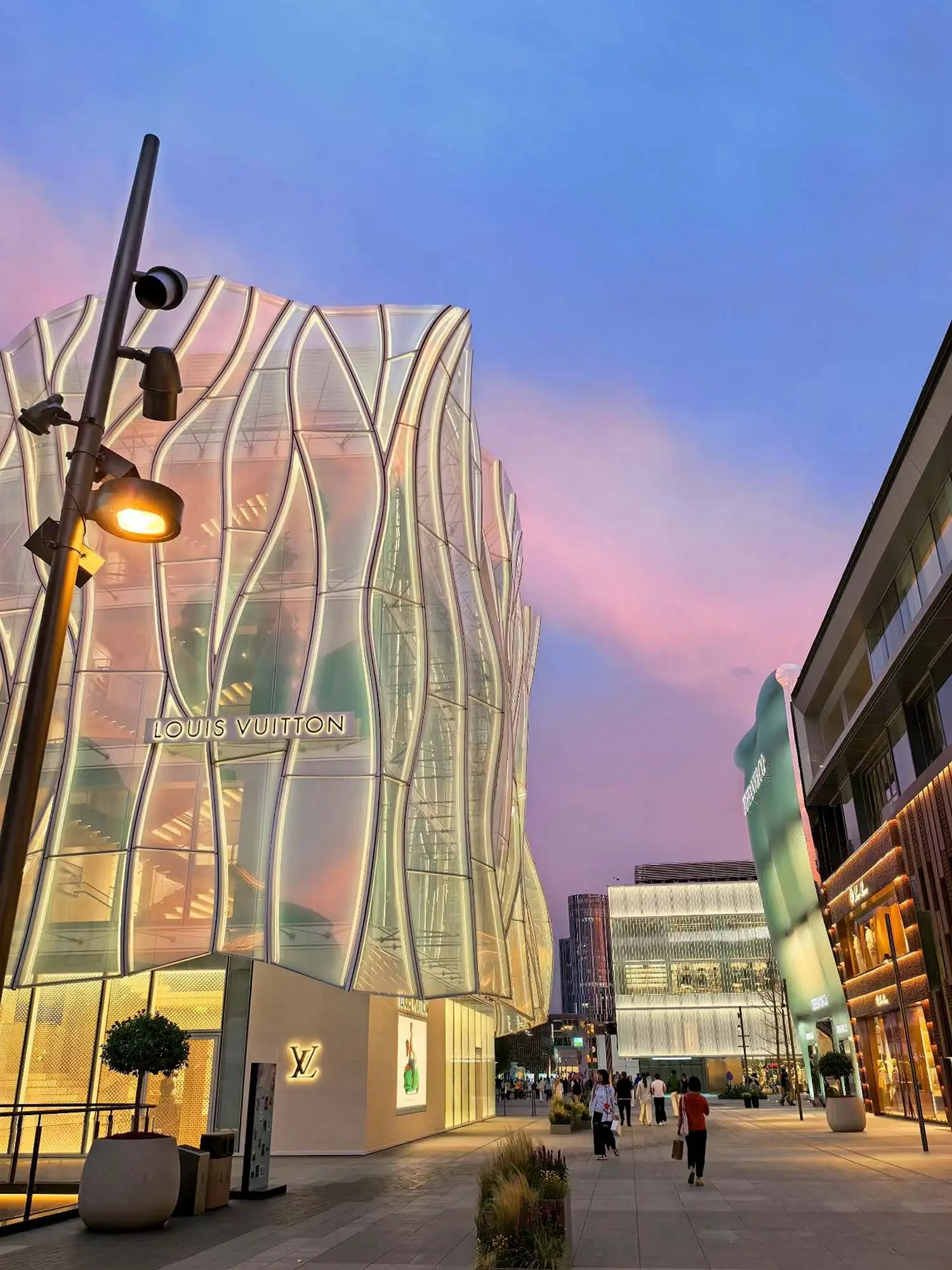
Beijing’s modern urban renewal replaced older informal street markets with a luxury and dining hub in Sanlitun to improve safety and the local economy.
Tell us about Sanlitun, where your studio is situated. Is it a dynamic area? What can individuals do while visiting and getting tattooed there?
Sanlitun is one of the most international commercial areas in Beijing. Almost every fashion brand you can think of is here, so it’s a very vibrant and dynamic district. Many clients like to explore the nearby shops and restaurants and enjoy a good meal to recharge after finishing their tattoos.
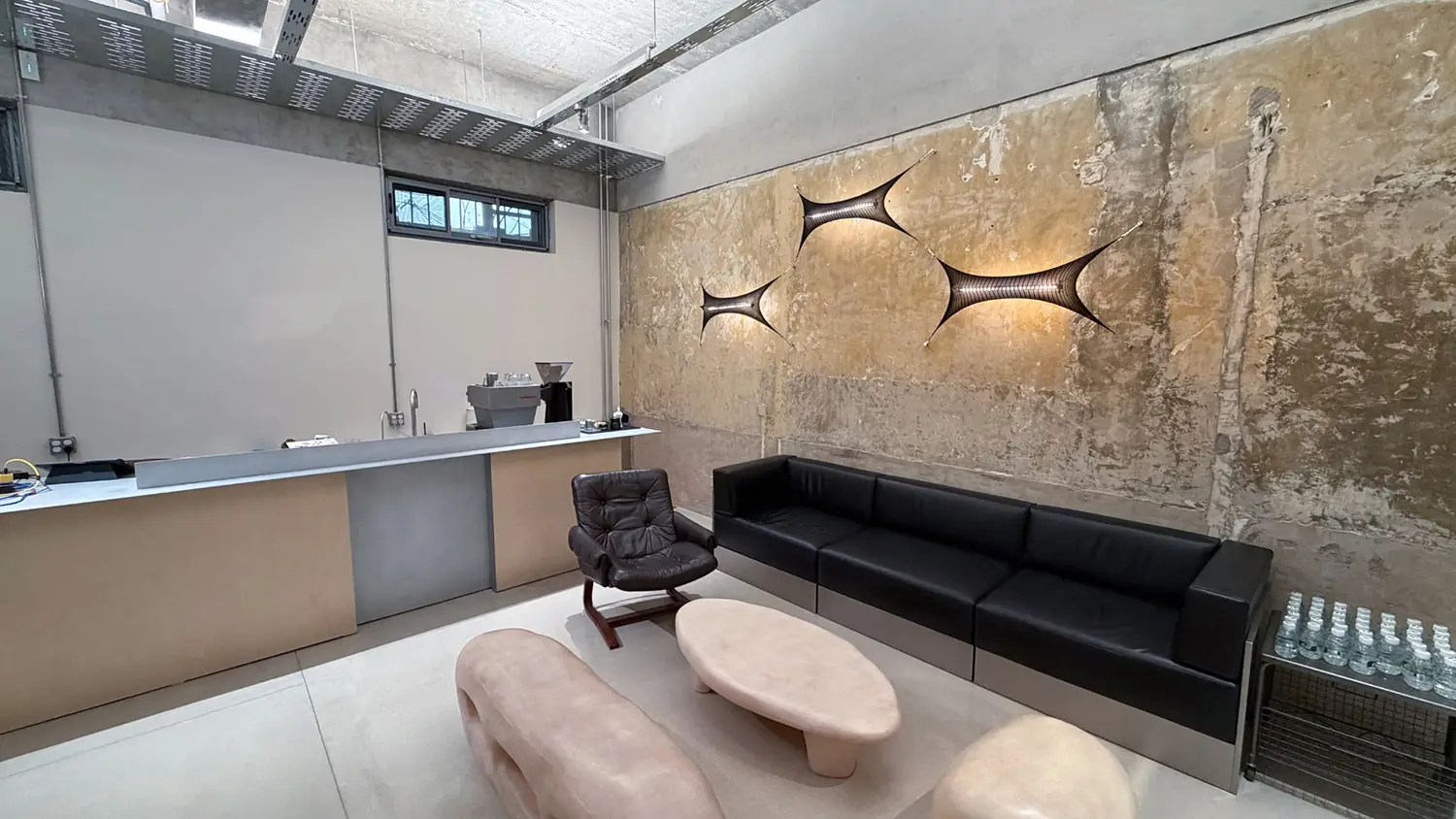
A hypermodern reception area at the NewTattoo Studio in Sanlitun contains marble furniture and a decorative wall.
How many tattooers work in your studio? Have you mentored any?
Currently, there are 15 tattoo artists at the studio, including myself. All of them started as my apprentices.
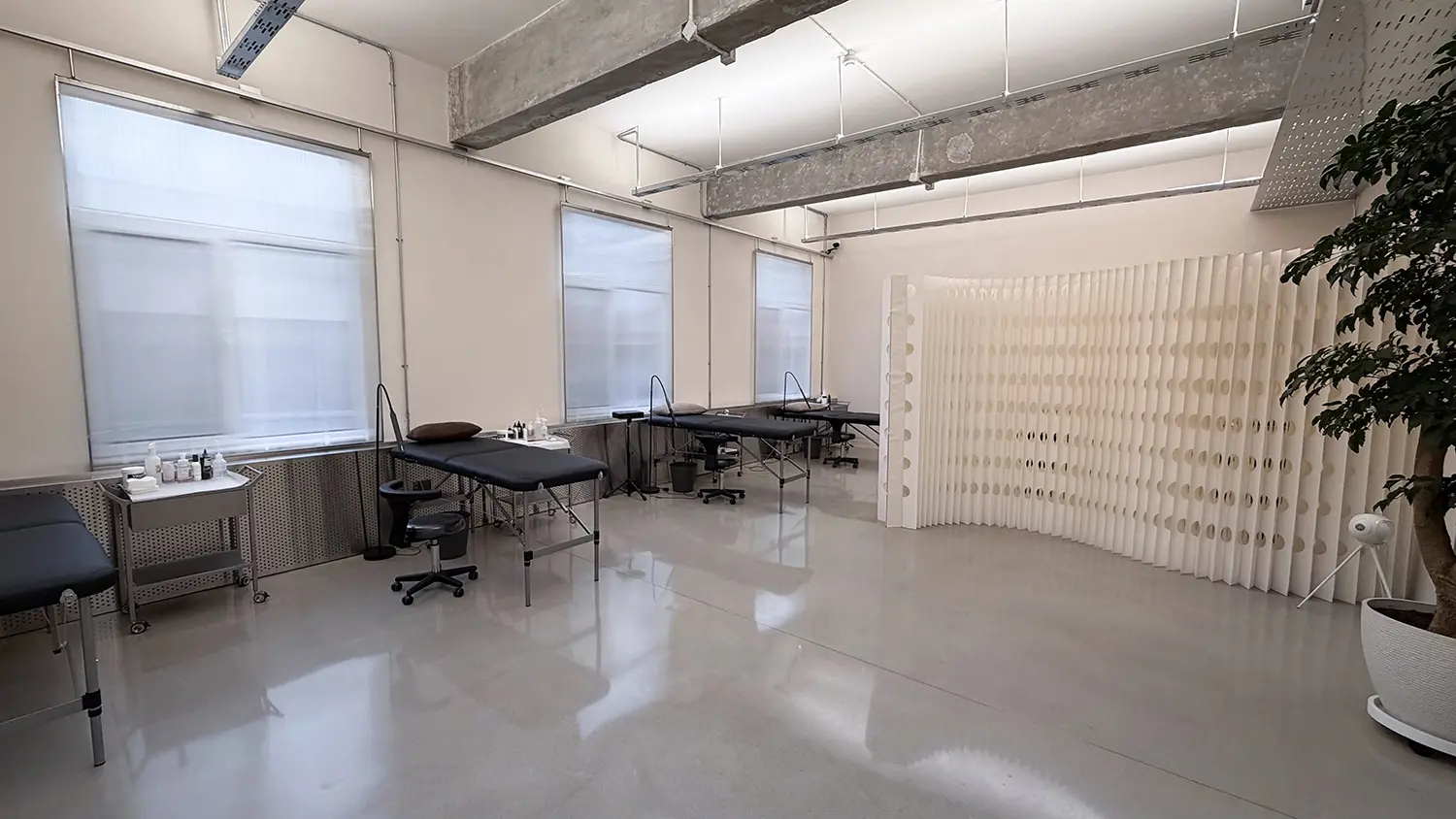
Chen Jie’s establishment is both organized and clinical.
Who tattooed your neck? And other parts of your body?
All the tattoos on my body were done by my longtime students, who have been working with me for many years.
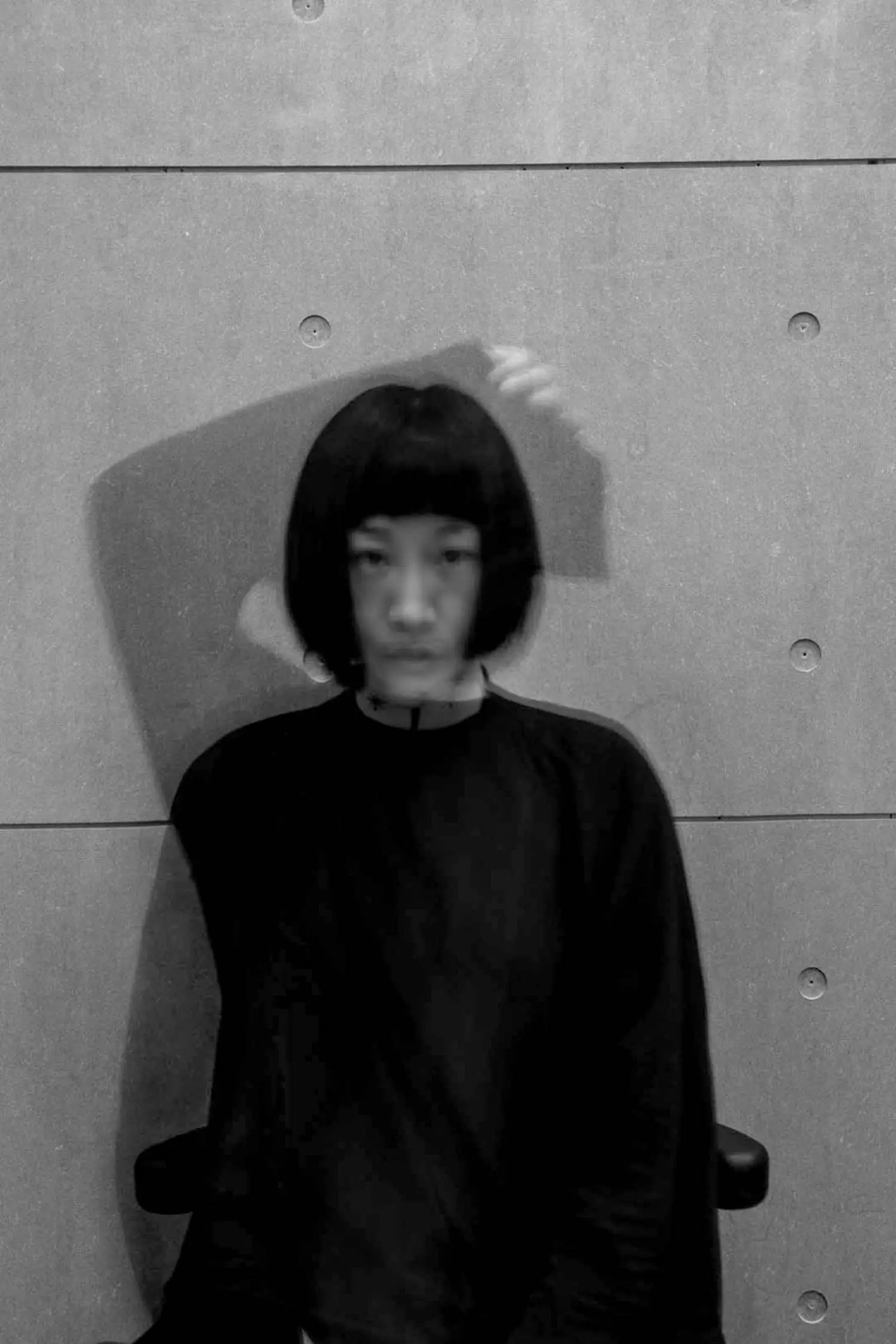
The remarkable Chen Jie, paving the way for tattoos both of today and tomorrow.
Can you share a bit about your personality, and how you enjoy life outside of your job?
Haha, I’m a straightforward person. Outside of work, I spend my time working out and exploring good food.
Photos © Chen Jie